Necklines and necklace choices
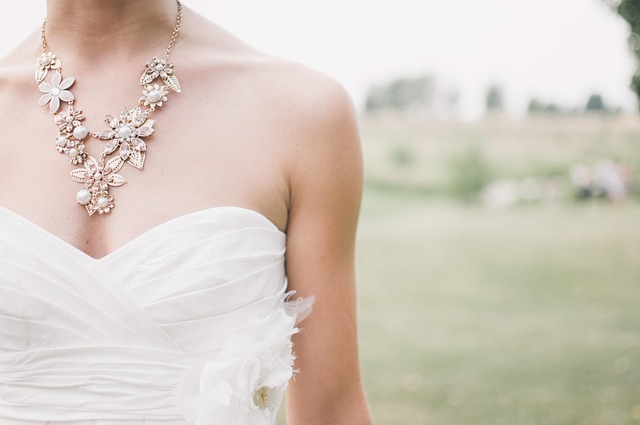
Understand where a necklace should sit in relation to the neckline edge, bodice detail, and fabric texture. Learn when to go shorter, when to layer lightly, and when to skip a necklace entirely.
These tutorials focus on cohesion and comfort. Learn how to choose earrings, necklaces, hair accessories, and finishing details that work with a dress neckline, hairstyle, and venue lighting, without overloading the look.
Balance first
One focal point, supportive details, and repeatable rules.
Comfort cues
Weight, fastenings, and wear time planning for the day.
Photo-aware
Finish choices that read well in close-ups and movement.

Focus
Cohesion, comfort, and calm sparkle
Use
Ceremonies, receptions, occasions
Bridal accessories can feel overwhelming because the pieces are small, yet highly visible in photographs and close-up moments. Our approach is to simplify the decision-making process: choose one main focus, then support it with quiet details that harmonise with the dress and hairstyle. We look at proportion, shine level, metal tone, and texture so you can create a cohesive look without chasing trends.
We also highlight comfort signals, especially for long wear. Earrings that are too heavy or necklaces that catch on fabric can become a distraction. In these tutorials, you will learn practical checks such as clasp placement, chain length adjustments, and how to test pieces under movement before committing to the final look.
Understand where a necklace should sit in relation to the neckline edge, bodice detail, and fabric texture. Learn when to go shorter, when to layer lightly, and when to skip a necklace entirely.
Learn how studs, drops, and statement shapes interact with updos, loose waves, veils, and hair accessories. We focus on silhouette and movement, not dramatic effects.
Explore pins, combs, and subtle headpieces with a focus on placement and comfort. We discuss how to avoid competing sparkle and how to keep the look cohesive.
Learn how to test for weight, clasp security, snag risk, and skin sensitivity. We share general habits for long events and how to store pieces safely between moments.
Helpful next step
If you want to build your overall styling foundation first, start with everyday coordination principles. Bridal looks become easier when the core rules are familiar.
Tone matching
Warm, cool, and neutral metals explained with simple tests.
Shine level
Polished, brushed, and textured finishes and where each works.
Use this framework to plan accessories without second-guessing. First, identify the visual focus: neckline detail, earrings, hair accessory, or a minimal necklace. Second, match the tone: choose metals and finishes that align with the dress fabric and other elements, including hair pins or veil embellishment. Third, check comfort: weight, secure fastenings, and movement under walking, hugging, and dancing.
Finally, preview the look under the conditions you expect on the day. Natural light, indoor lighting, and photography flash can change how shine appears. The goal is not maximum sparkle. It is controlled detail that feels elegant, personal, and consistent in different moments.
A quick self-check before the final choice
Clear answers to common coordination questions. These notes are educational and general, intended to help you plan calmly and check comfort.
Pick one main focus. If your dress has detail near the neckline or you are wearing a veil with embellishment, statement earrings often work well while keeping the necklace minimal or absent. If the neckline is clean and you want a centered focal point, a statement necklace can work with quieter earrings.
Matching metals can look cohesive, but it is not mandatory. If you mix tones, keep the finishes consistent and limit the mix to two tones. A simple way to decide is to choose the metal that flatters your dress undertone, then keep other pieces within the same visual temperature.
Test pieces at home: wear earrings for at least 30 minutes, check clasp security, and move naturally. Look for snag risks on lace, beading, or textured hair. If a piece requires constant adjustment, it may distract from the day even if it looks beautiful in a still photo.
Not necessarily. If you want a small change, consider adjusting only one element such as swapping earrings or removing a hair accessory, rather than changing everything. This keeps the look consistent and reduces the risk of losing items during transitions.